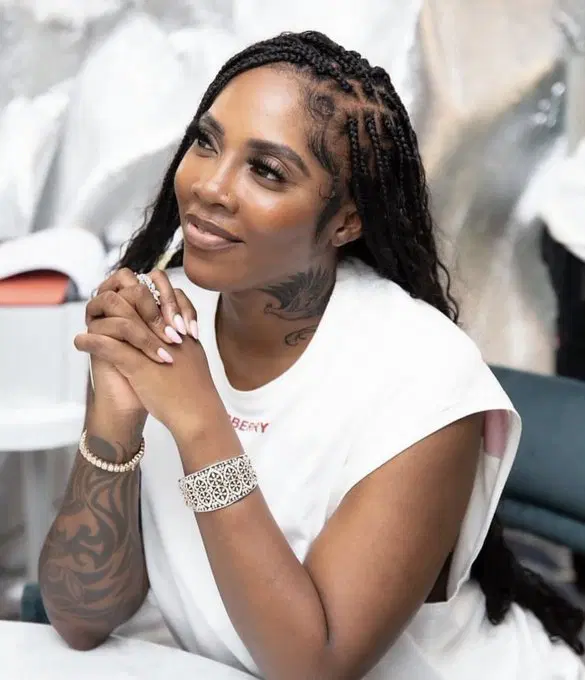
Nigerian singer Tiwa Savage has revealed that she was banned from performing at some shows and had her music videos restricted by television stations in Nigeria because of her dressing and tattoos.
The award-winning singer disclosed this during an interview with streamer Ten Posty, where she recounted the challenges she encountered after returning from Los Angeles to establish her music career in Nigeria.
According to Savage, her appearance and personal style attracted criticism from sections of the Nigerian entertainment industry, leading to restrictions on her professional activities.
She said some television stations refused to broadcast her music videos, while she also faced restrictions from show organisers over concerns surrounding her dressing and visible tattoos.
The singer described the treatment as unfair, arguing that she was singled out and made an example of at a time when her fashion choices were considered controversial within the Nigerian entertainment industry.
READ ALSO: First Lady Calls For Stronger Protection Against Child Sexual Abuse
Savage expressed frustration that female artistes who emerged after her now wear similar outfits without attracting the level of criticism or professional restrictions she experienced.
She suggested that the industry’s response to her appearance reflected a double standard in how female musicians were treated, particularly during the early stages of their careers.
The singer’s account highlights the pressures faced by female entertainers navigating the expectations of Nigeria’s conservative cultural environment while attempting to establish distinctive public identities.
Savage, who built an international music career before returning to Nigeria, has become one of the country’s prominent female Afrobeats performers, with a catalogue of songs and collaborations that have earned her recognition across Africa and beyond.
Her comments also draw attention to the relationship between artistic expression, broadcasting standards and the commercial opportunities available to female musicians in Nigeria.
Although music videos and stage performances remain important platforms for promoting artistes, restrictions by broadcasters and event organisers can affect their visibility, audience reach and career development.
Savage’s experience raises questions about changing attitudes towards female performers and whether the entertainment industry applies consistent standards to artistes with similar fashion choices.
The singer’s remarks have renewed attention on the challenges she encountered while building her career in Nigeria and the broader expectations placed on women in the country’s music industry.