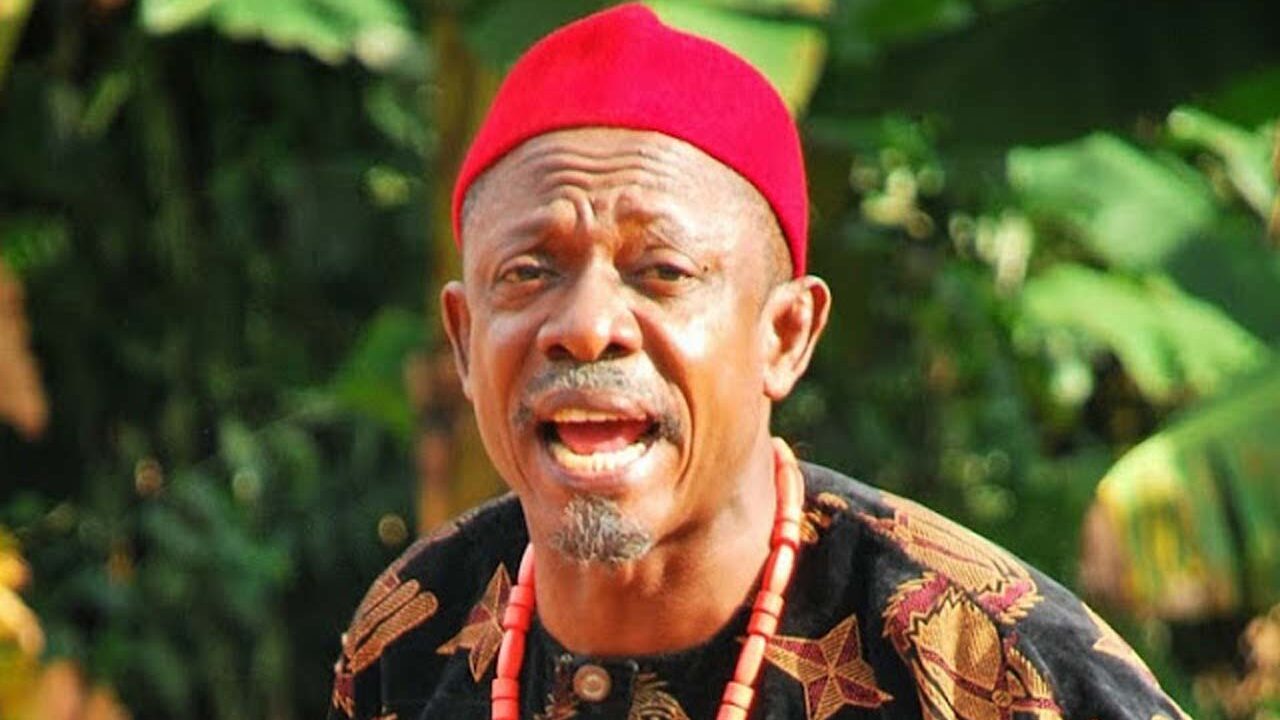
Veteran Nollywood actor, Nkem Owoh, popularly known as Osuofia, has clarified his comments on the origins of Nigeria’s home video industry, insisting that Yoruba filmmakers pioneered home video production before the emergence of the Nollywood identity.
Owoh explained that the name Nollywood was not in existence when he and other actors began their filmmaking careers, stressing that the term was adopted much later to identify the Nigerian film industry.
The veteran actor made the clarification during an appearance on Curiosity Made Me Ask, a programme hosted by Nigerian skit maker and content creator, Adebayo Abidemi, popularly known as Bae U.
According to Owoh, his earlier comments about the history of Nigerian filmmaking were misunderstood, as he was referring specifically to the development of home video production and not claiming that Yoruba filmmakers created Nollywood.
He credited prominent Yoruba filmmakers, particularly late veteran filmmaker Hubert Ogunde, with laying important foundations for the home video tradition in Nigeria.
READ ALSO: Yari Targets 2.3m Votes For Tinubu In Rivers
“I never said Yoruba started Nollywood. When did Nollywood come out? When we started film, there was no Nollywood as a name,” Owoh said.
He further stressed that Ogunde, who played a significant role in the development of Yoruba theatre and film, was not Igbo.
“Ogunde is not Igbo. I am not telling you that Yoruba started it.
“Yoruba did not start Nollywood; they started home video and the rest,” he added.
The clarification has renewed discussions about the contributions of different ethnic groups and pioneering filmmakers to the development of Nigeria’s film industry.
Yoruba travelling theatre practitioners, including Ogunde, were instrumental in developing indigenous stage productions and bringing theatrical performances to film audiences.
The growth of home video production in the 1980s and 1990s subsequently created opportunities for filmmakers across different parts of Nigeria, contributing to the emergence of the industry now widely known as Nollywood.
Meanwhile, Owoh also recently discussed how his popularity as a comic actor sometimes affects people’s reactions to him outside movie sets.
He recalled that people often expect him to be funny because of the characters he portrays in films, even when he is involved in serious situations.
The actor narrated an experience at a gathering where he was invited to lead a prayer.
According to him, some attendees burst into laughter as soon as he began praying and called on God, apparently because they associated his voice and mannerisms with his comic performances.
Owoh said the experience illustrated how his screen personality has shaped public perception of him, making it difficult for some people to separate his acting roles from his real-life personality.
The actor remains one of Nigeria’s recognisable comedy performers, having featured in numerous films that have contributed to the popularity of Nollywood across Africa and beyond.