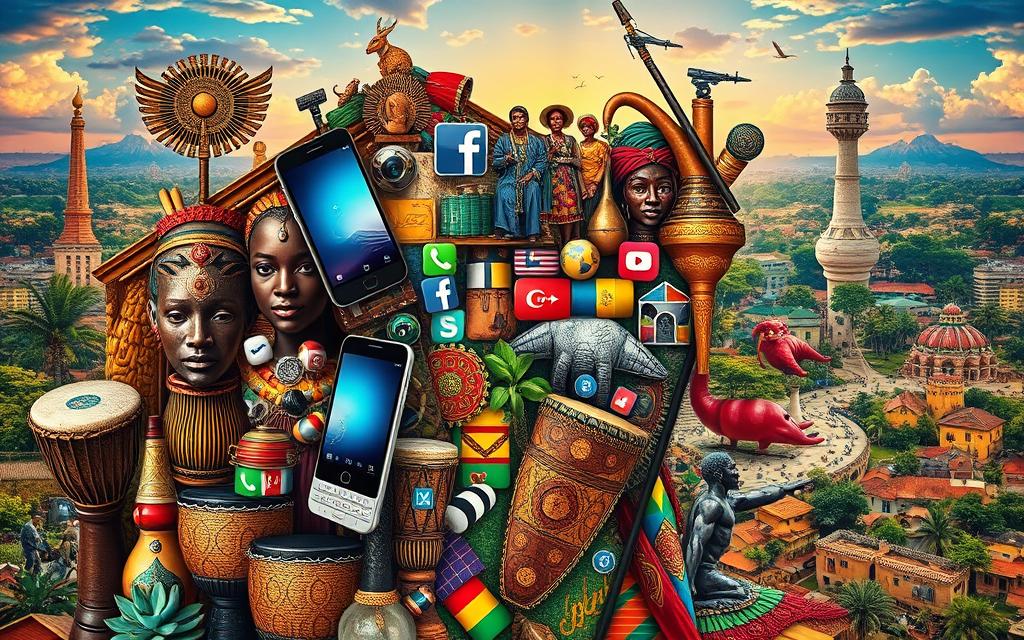
Across Africa’s entertainment landscape, something subtle but powerful is happening. It is not just the release of hit songs or blockbuster films, nor the rise of viral social media stars. It is a deeper shift in how entertainment is created, consumed, monetized, and understood.
From Lagos to Nairobi, Accra to Johannesburg, a new generation of creatives is reshaping the industry with digital tools, global ambition, and a bold refusal to follow old rules. What was once a fragmented scene driven by traditional gatekeepers, record labels, television stations, and film distributors is now a fluid ecosystem powered by streaming platforms, social media virality, and direct audience engagement.
This transformation is not only changing careers; it is redefining what it means to be a celebrity in the 21st century African context.
The Rise of the Digital Star
A decade ago, fame in African entertainment largely depended on access access to studios, production companies, radio play, and television exposure. Today, a smartphone and an internet connection can be enough to launch a career.
Short-form video platforms, especially TikTok, Instagram Reels, and YouTube Shorts, have become the new talent discovery engines. Young comedians, dancers, singers, and skit makers are bypassing traditional structures entirely, building massive audiences from bedrooms, street corners, and small studios.
In Nigeria, skit-making has evolved into a full-fledged industry. What began as comedic experiments is now a multimillion-naira ecosystem employing writers, actors, editors, marketers, and brand managers. Creators such as online comedians and influencers have turned everyday humour into global exportable content.
This democratization of fame has lowered entry barriers but raised competition. Attention has become the new currency, and consistency, relatability, and creativity are now more important than formal industry backing.
Yet, the speed of digital fame also comes with instability. Viral success can be sudden and short-lived. Many creators struggle to transition from online popularity to long-term financial sustainability.
Nollywood’s Quiet Revolution
While music and digital content often dominate headlines, Nollywood the Nigerian film industry is undergoing its own quiet revolution.
Streaming platforms such as Netflix, Amazon Prime Video, and Showmax have opened new doors for African storytelling. Filmmakers are now creating content with higher production values, deeper narratives, and broader international appeal.
READ ALSO: Davido, Burna Boy, Rema, Ayra Starr Make FIFA World Cup 2026 Album
The traditional model of direct-to-DVD distribution has largely faded, replaced by cinema releases and global streaming deals. This shift has expanded revenue opportunities but also increased pressure on filmmakers to meet international standards.
What is emerging is a dual Nollywood: one catering to local mass audiences through cinemas and YouTube, and another targeting global audiences with polished, festival-ready productions.
Directors are experimenting more boldly with themes such as mental health, migration, political corruption, identity, and generational conflict. African stories are no longer being told only for African audiences they are being positioned as global narratives with universal resonance.
However, funding remains a major challenge. Many filmmakers still rely on private investors or personal savings to bring projects to life. While international platforms have increased visibility, access to consistent financing is still limited compared to Hollywood or Bollywood industries.
The Music Industry Without Borders
African music is currently experiencing one of its most influential periods in history. Afrobeats, Amapiano, Afro-fusion, and other genres are no longer regional sounds they are global forces.
Artists from Nigeria, South Africa, Ghana, and beyond are now headlining international festivals, collaborating with global superstars, and topping global charts. What was once considered “local music” is now shaping global pop culture.
The success of African music is driven by a combination of factors: infectious rhythm, digital distribution, diaspora support, and strategic collaborations. Streaming platforms like Spotify, Apple Music, and Audiomack have eliminated geographical barriers, allowing African artists to reach global audiences instantly.
But behind the glamour lies a complex reality. Many artists face challenges around copyright protection, royalty payments, and contract fairness. The industry is still evolving its legal and financial structures to match its rapid global expansion.
Despite these challenges, African music continues to grow in influence, with many observers predicting that the continent will become one of the most important drivers of global pop culture in the coming decade.
The Social Media Economy of Fame
Perhaps the most disruptive force in entertainment today is social media itself. Platforms have not only changed how content is distributed they have changed what content is created.
Entertainment is now deeply tied to virality. Trends emerge overnight, driven by memes, challenges, dance routines, and short skits. Audiences are no longer passive consumers; they are active participants in shaping what becomes popular.
Influencers now play a role once reserved for traditional media outlets. A single viral post can launch a music career, revive a forgotten song, or turn an unknown actor into a household name.
However, this ecosystem is also highly competitive and unpredictable. Algorithms dictate visibility, and creators often struggle to maintain relevance in an environment that demands constant output.
Mental health concerns are also becoming more visible. The pressure to remain constantly visible, relevant, and entertaining has led to burnout among many digital creators.
Fashion, Identity, and Cultural Expression
Entertainment in Africa is increasingly intertwined with fashion and identity. Artists and actors are no longer just performers they are style icons and cultural ambassadors.
African designers are gaining global recognition as entertainers showcase local fashion on international stages. Traditional fabrics such as Ankara, Kente, and Aso Oke are being reimagined in modern silhouettes that blend heritage with contemporary aesthetics.
Music videos, red carpet events, and social media appearances have become powerful platforms for cultural expression. Entertainment is now a space where identity is negotiated and celebrated.
This fusion of fashion and entertainment is also creating new business opportunities, from brand endorsements to fashion collaborations and lifestyle ventures.
The Business Behind the Glamour
While entertainment often appears glamorous from the outside, the industry is fundamentally a business ecosystem driven by contracts, negotiations, and financial strategy.
Brand endorsements remain one of the most lucrative income streams for entertainers. Corporations are increasingly partnering with influencers and celebrities to reach younger audiences who are less responsive to traditional advertising.
At the same time, there is growing awareness among entertainers about ownership and control. Many are beginning to build independent labels, production companies, and media brands to retain greater control over their intellectual property.
This shift reflects a broader trend toward entrepreneurship within the entertainment industry.
Challenges in a Rapidly Evolving Industry
Despite its growth, the African entertainment industry continues to face significant structural challenges.
Piracy remains a major issue, particularly in film and music distribution. Weak enforcement of intellectual property laws affects revenue generation and discourages investment.
Infrastructure gaps also persist. Limited access to world-class studios, post-production facilities, and distribution networks can hinder creative output.
In addition, funding remains inconsistent, with many projects relying on short-term financing rather than long-term investment structures.
Yet, despite these challenges, the industry continues to grow at an impressive pace, driven by creativity, resilience, and innovation.
The Global Moment for African Entertainment
What makes this moment particularly significant is its global context. The world is increasingly looking to Africa not just as a market, but as a source of cultural innovation.
International film festivals are showcasing African cinema more prominently. Global music charts feature African artists more frequently. Fashion houses are collaborating with African designers. Streaming platforms are investing in African content.
This is not a trend it is a shift in global cultural power dynamics.
African entertainment is no longer on the margins of global culture. It is becoming central to it.
Conclusion: A Story Still Being Written
The story of African entertainment is still unfolding. It is a story of innovation without limits, creativity without boundaries, and ambition without apology.
From the rise of digital creators to the global dominance of Afrobeats, from Nollywood’s reinvention to the emergence of a new entrepreneurial class of entertainers, the industry is undergoing one of the most significant transformations in its history.
Yet, beneath all the success stories lies a simple truth: this is only the beginning.
The next decade will determine whether Africa’s entertainment industry can consolidate its gains, solve its structural challenges, and fully realize its global potential.
For now, one thing is clear the world is watching, listening, and dancing to Africa’s rhythm.
And Africa is only just getting started.