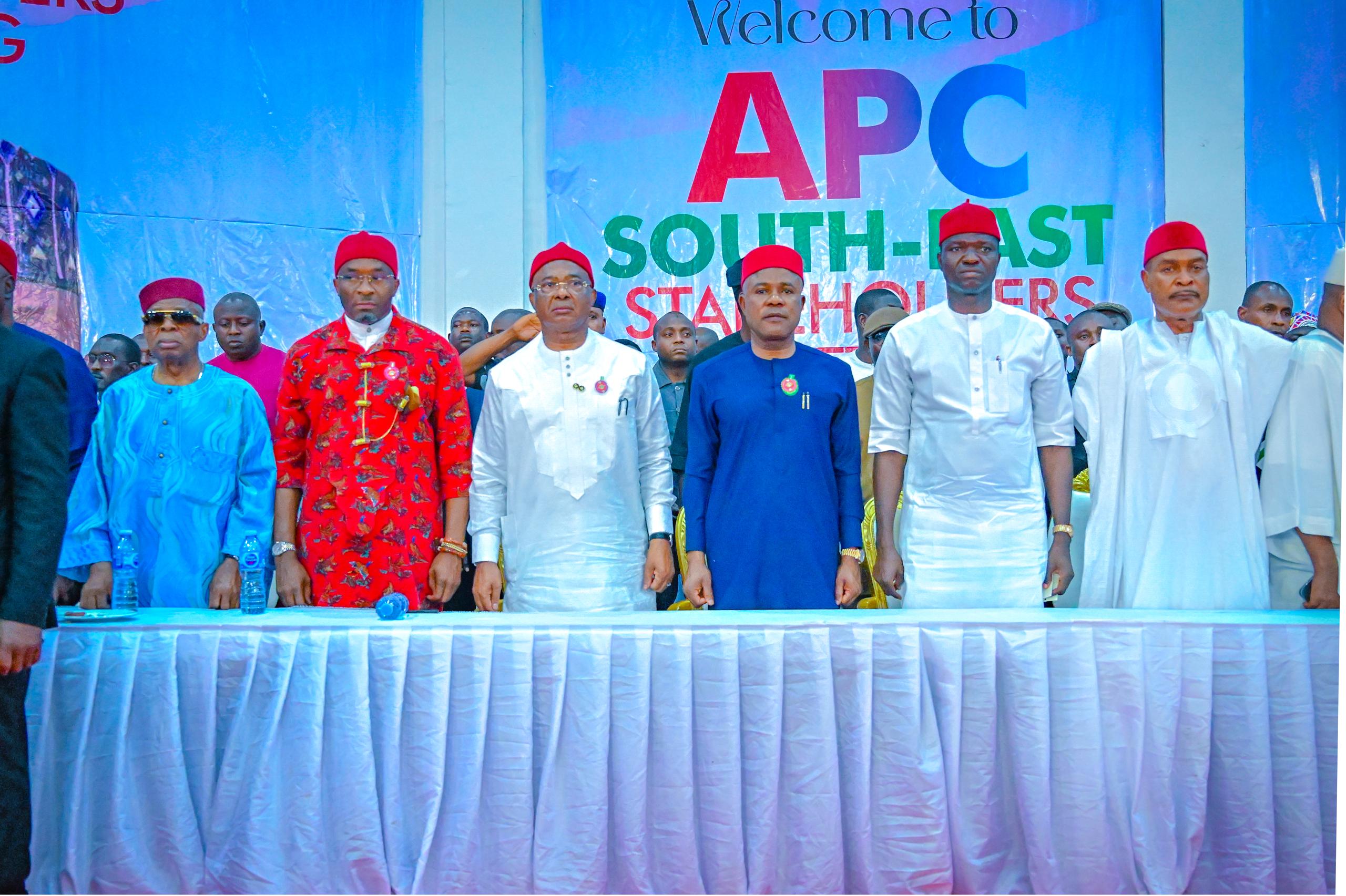

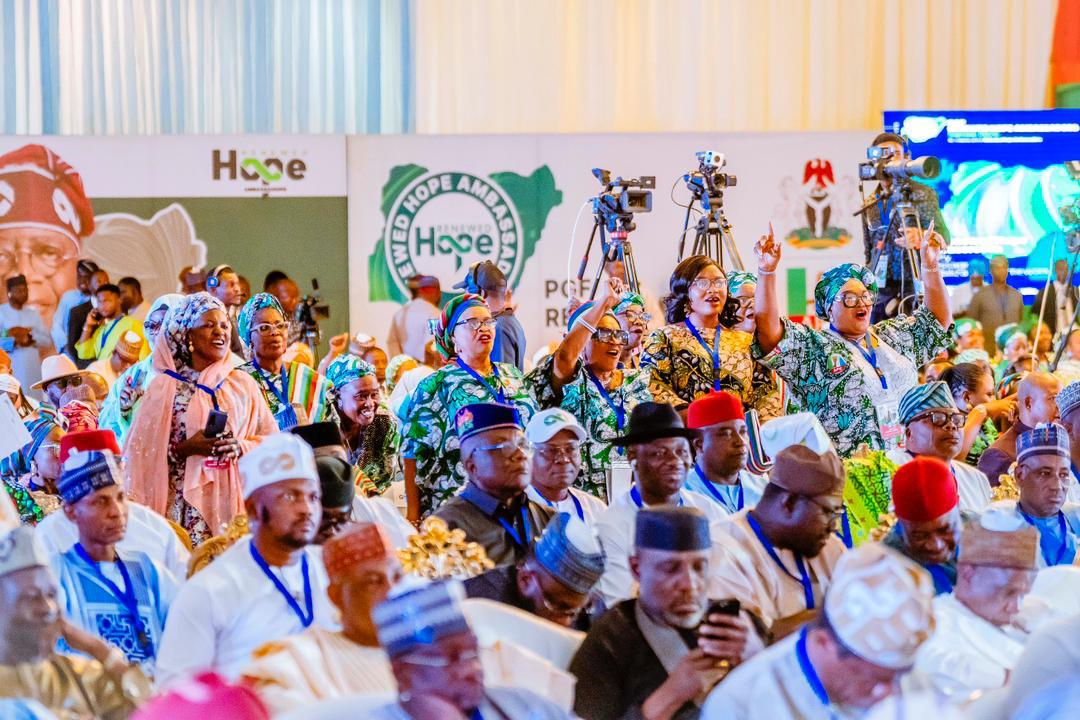
It was a roll call of Nigeria’s contemporary political elite a convergence of the nation’s grassroots mobilizers at scale.
Over 20 Governors of the All Progressives Congress, leaders of the National Assembly, former governors still within APC ranks, Speakers of State Houses of Assembly, members of the Federal Executive Council, party executives, commissioners for information, and zonal and state coordinators of the Renewed Hope Ambassadors gathered at the State House Conference Hall on Tuesday for what has now clearly become a defining strategic moment for the party and its mobilization architecture.
It was a gathering like no other. Call it APC’s show of force and you won’t be wrong. President Tinubu’s administration’s Renewed Hope Agenda continues to resonate and deliver fundamental changes.
The PGF–Renewed Hope Ambassadors Strategic Summit was not designed as a rally, nor as a symbolic convergence. It was structured as a working session a recalibration meeting aimed at closing the gap between reform performance and public perception.
President Bola Ahmed Tinubu delivered the keynote address, ably represented by Vice-President Kashim Shettima. The President noted that the timing of the summit coincided with the week of his 1,000th day in office a symbolic milestone that underscored the journey of reform undertaken since May 29, 2023.
He framed the gathering not as political choreography but as a moment of collective reflection on the structural reforms pursued, the stabilization achieved, and the responsibility of leadership to ensure that national vision translates into visible impact at the grassroots.
In his keynote, the President reaffirmed that the reforms initiated by his administration were not designed for applause but for restoration restoration of macroeconomic balance, institutional credibility, and long-term fiscal sustainability.
He pointed to early stabilization signals: moderating inflationary pressures, easing fuel prices, a steadier foreign exchange market, and gradually returning investor confidence.
He emphasized that as Nigeria moves into 2026, the focus must shift from stabilization to acceleration, anchored by the ₦58.18 trillion Budget of Consolidation, Renewed Resilience and Shared Prosperity, alongside landmark tax reforms intended to protect the vulnerable, encourage enterprise, and entrench transparency.
Crucially, the President positioned the Renewed Hope Ambassadors not as a ceremonial structure but as a civic engagement and enlightenment architecture a bridge between policy formulation and public understanding.
Their mandate, he stressed, is to translate reform into relatable language, counter misinformation with facts, and ensure two-way communication between citizens and government. Enlightenment, he reminded the gathering, is governance.
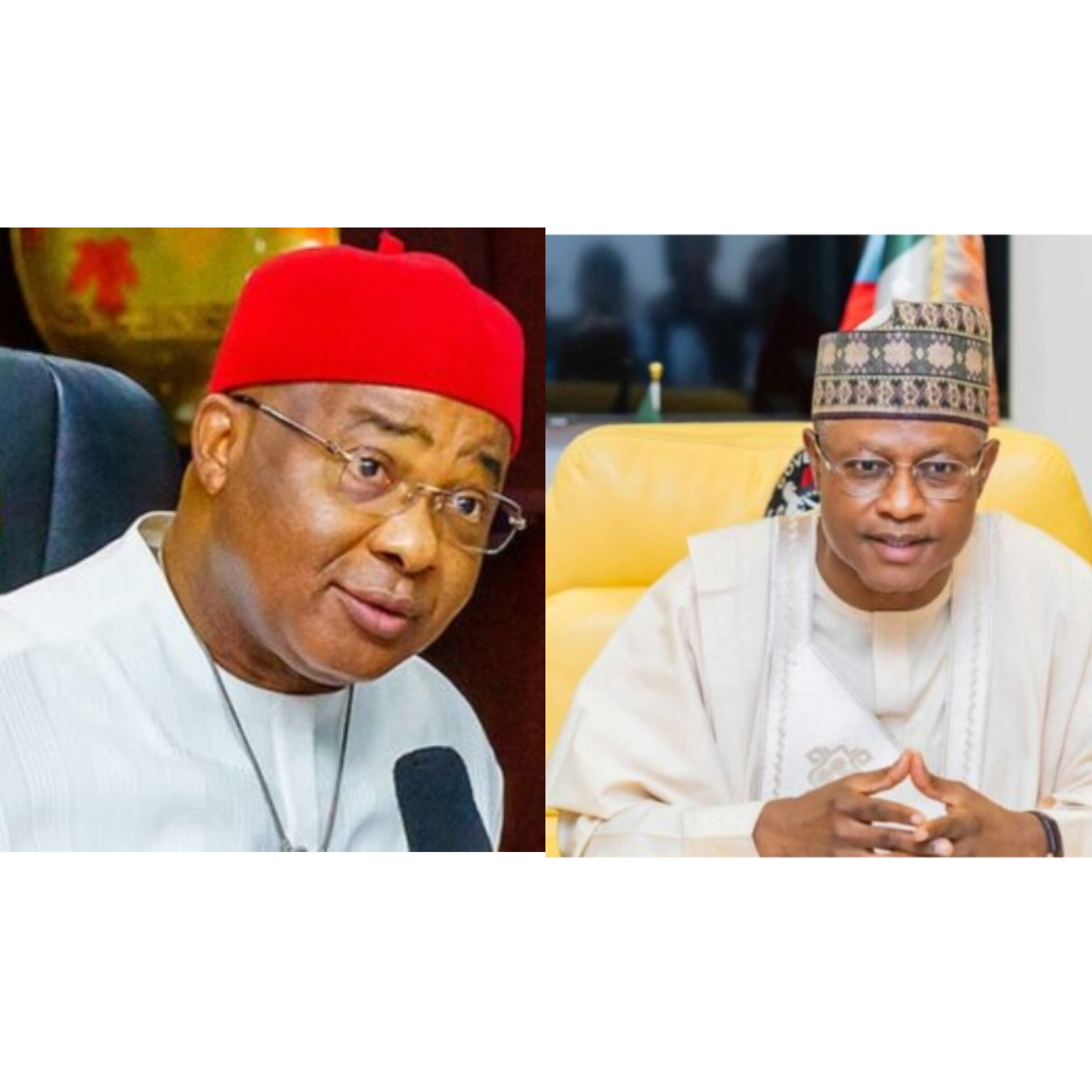
But if the keynote framed the national reform context, it was the address by Senator Hope Uzodimma, CON, Governor of Imo State, Chairman of the Progressive Governors’ Forum and Director-General of the Renewed Hope Ambassadors, that defined the operational direction of the Summit.
Governor Uzodimma’s speech was both diagnostic and prescriptive. He began by acknowledging the weight of leadership assembled in the room but quickly pivoted to the deeper challenge confronting the party and government: not a deficit of reform, but a deficit of reform communication.
According to him, policy success without citizen understanding creates perception gaps and perception gaps, if left unattended, weaken democratic legitimacy.
He identified four critical structural gaps: communication fragmentation across states and platforms; weak institutionalized grassroots templates; inconsistent and unmeasured membership expansion; and role ambiguity between party structures and mobilisation platforms. The Summit, he declared, existed to close these gaps through architecture, not rhetoric.
Governor Uzodimma then unveiled what may well become the most consequential outcome of the engagement a clearly defined three-pillar mobilisation architecture.
Pillar One: The Renewed Hope Ambassadors structure operating at zonal, state, local government, ward, and polling unit levels.
Pillar Two: Government information machinery, led by Commissioners for Information and supported by media units across ministries.
Pillar Three: Party structures APC state chairmen, secretaries, youth and women leaders, ward and polling unit executives.
The objective, he emphasized, is synergy not competition. The Ambassadors are amplifiers, not alternatives. Commissioners are custodians of narrative discipline.
Party executives are guardians of ideological coherence and membership growth. Progressive Governors are to align governance delivery with mobilisation logistics and messaging consistency.
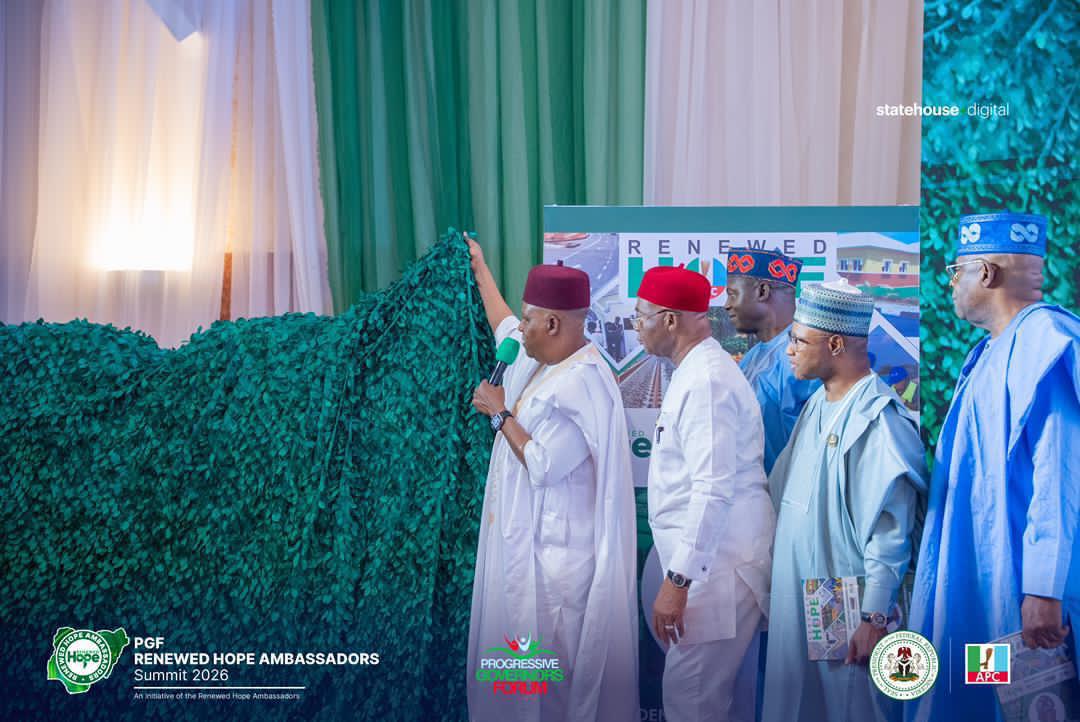
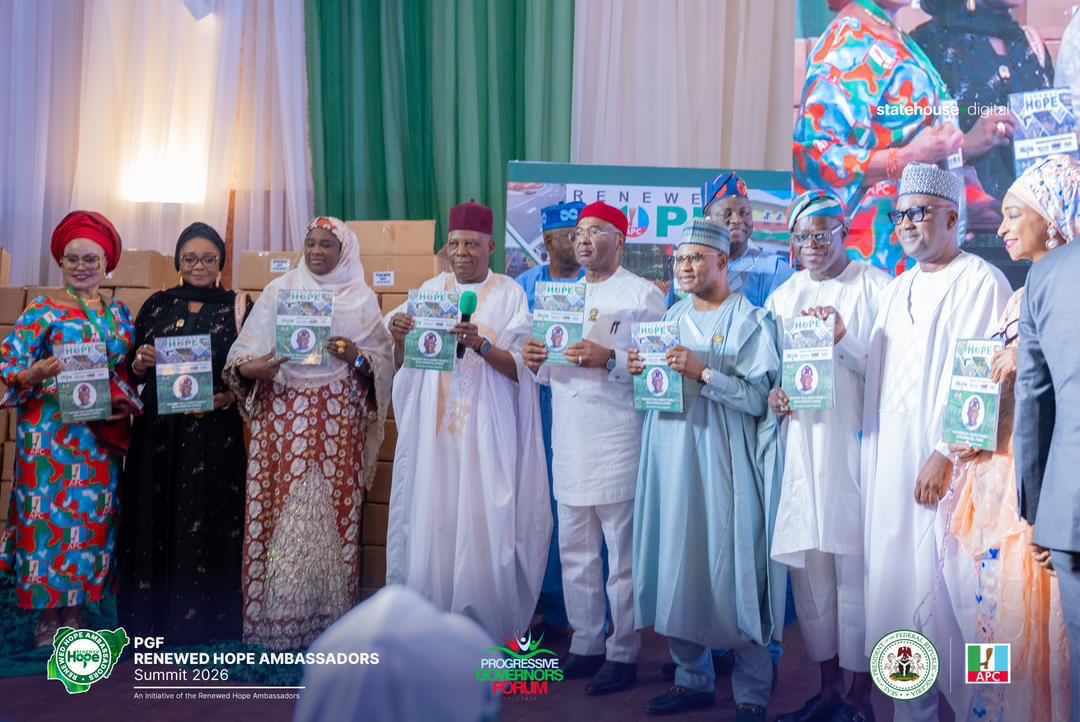
The Summit also witnessed the formal launch of the Unified Messaging Guide for the Renewed Hope Ambassadors, unveiled by Vice-President Kashim Shettima.
The Guide provides standardized reform explanations, verified data points, response templates to misinformation, grassroots engagement formats, and a coordinated communication cadence. Its launch marked a decisive move from fragmented enthusiasm to disciplined national narrative management.
Governor Uzodimma outlined time-bound deliverables: a 14 day circulation of messaging tools and communiqué; 30 day state alignment meetings and dashboard activation; 60 day rollout of ward-level engagement templates and harmonized membership drives; and quarterly performance reviews. Mobilisation, he stressed, must become measurable, structured, and data-driven.
Particular emphasis was placed on youth and women inclusion not as symbolic participation but as institutional pathways. With over 60% of Nigeria’s population under 35, the Governor argued that sustainability requires generational integration.
Digital engagement systems, innovation dialogues, economic empowerment platforms, and leadership pipelines must become embedded within party structures.
Throughout the Summit, one central theme remained clear: reform courage must be matched by communication discipline. Governance results must be explained, defended, internalized, and owned at the ward level.
Social media deployment, local-language content production, rapid-response misinformation units, and structured feedback loops were all positioned as non-negotiable instruments of modern political organization.
By the close of proceedings, what had begun as a high-level political convergence had evolved into something more structured an attempt to institutionalize citizen engagement as a pillar of governance continuity. The reaffirmation was clear: one message, one direction, one coordinated mobilisation framework anchored on facts, measurable progress, and national interest.
The PGF–Renewed Hope Ambassadors Strategic Summit may well be remembered not for the prominence of those present though the presence was formidable but for the architecture it set in motion.
From the State House Conference Hall, a clear signal went forth that the age of improvisation is yielding to the discipline of structure, and that mobilisation, like governance itself, must now be intentional, coordinated, and accountable.
It was here that Hope Uzodimma fired up a movement not with noise, but with clarity; not with slogans, but with structure. One message. One movement. Renewing the hopes of Nigeria.
And what was set in motion within those walls now moves outward from conference hall to community, from strategy to street, from policy rooms to polling units carrying a shared resolve to translate reform into understanding, understanding into trust, and trust into a stronger, more confident Nigeria.