
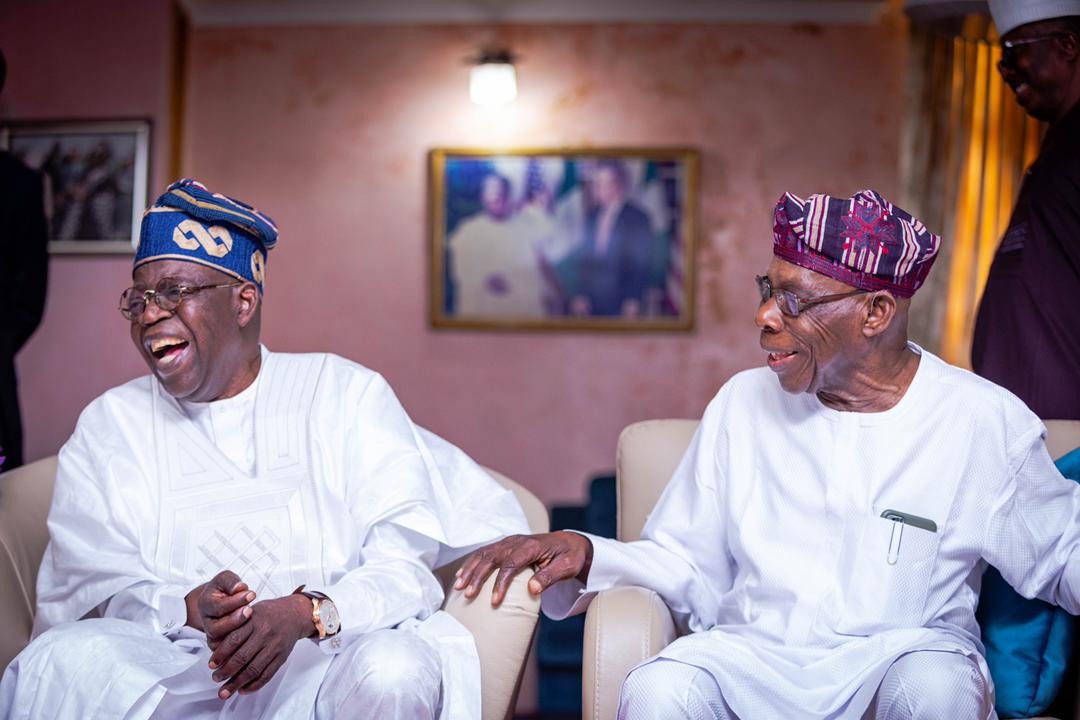
Former President Olusegun Obasanjo has hailed the recent stabilisation of the Nigerian naira as a major achievement for the administration of President Bola Ahmed Tinubu, describing it as a significant boost to economic confidence and investor sentiment.
Speaking on Friday, Obasanjo noted that the improved stability of the national currency reflects the positive impact of ongoing fiscal and monetary policies implemented by the Tinubu-led government. He emphasized that a stronger naira helps reduce inflationary pressures, supports local businesses, and restores confidence among domestic and international investors.
“The stabilisation of the naira is not just a monetary issue; it is a reflection of the administration’s commitment to economic management, fiscal discipline, and structural reforms,” Obasanjo said. “It is a welcome development that can strengthen our growth trajectory and deepen investor trust in Nigeria’s economy.”
The former president also highlighted the role of coordinated policies between the Central Bank of Nigeria and the Ministry of Finance in achieving the current exchange rate stability. He urged continued policy consistency to maintain the gains and avoid future volatility.
READ ALSO: Stop Lamentation Over Electoral Act, Presidency Tells ADC, NNPP
Economic analysts have attributed the stabilisation to a combination of factors, including increased foreign exchange inflows, tighter controls on import demand, and government incentives to boost local production and export earnings. These measures have helped reduce pressure on the naira, which had experienced sharp fluctuations in previous months.
Obasanjo stressed that while stabilising the currency is a positive step, it must be complemented by broader economic reforms such as job creation, infrastructure development, and diversification of revenue sources beyond oil. He called on policymakers to sustain reforms that promote macroeconomic stability and encourage long-term investment.
President Tinubu’s administration has made economic stabilisation a key priority, alongside efforts to attract foreign investment, expand the manufacturing sector, and strengthen fiscal governance. The administration recently reported progress in reducing inflationary trends and boosting local production, which are seen as complementary to the currency stabilisation efforts.
Observers note that the endorsement from a former president like Obasanjo sends a strong signal to markets and international partners about Nigeria’s growing economic resilience. It also underscores the political and economic importance of maintaining stable monetary and fiscal policies amid global uncertainties.
With the naira stabilising, government officials, investors, and businesses alike are cautiously optimistic that Nigeria is on a path toward stronger economic growth, reduced volatility, and enhanced confidence in its financial system.